Every October, Bureau field agents in San Diego report the same migration: marigolds in shop windows, sugar skulls on bar tops and, in nearly every cooler, a crisp Mexican-style lager. With Dia de los Muertos arriving Nov. 1 and 2, this is our specimen classification for Earthlings who want to know what they are actually drinking, where it came from and which local versions are worth a pint.
Specimen classification: what makes a Mexican-style lager
Start with an inconvenient fact. The Beer Judge Certification Program, the guidelines most homebrew competitions use, has no standalone Mexican lager category. Its International Pale Lager entry tells entrants they “may specify regional variations, if desired (Mexican lager, Dutch lager, etc.),” and it lists Corona Extra among its commercial examples.
The BJCP describes that family as “a highly-attenuated pale lager without strong flavors, typically well-balanced and highly carbonated,” served cold. Brewers may use rice, corn or sugar as adjuncts. Corn shows up often in San Diego’s craft versions, as you will see below. So a working definition of a Mexican-style lager: pale, clean, light-bodied, very cold, and frequently brewed with a share of corn.
/// FIELD GUIDE ENTRY, SAN DIEGO SECTOR: PALE-TO-AMBER BOTTOM-FERMENTED SPECIMEN, OFTEN SIGHTED NEAR TACOS. LIME WEDGE OPTIONAL. ORIGIN LEGENDS UNRELIABLE. ///
Two subspecies: light vs. amber Mexican-style lager
The pale Mexican-style lager is only half the family. The other branch is darker, maltier and tied to a 19th-century Austrian style. Here is how the two line up, using BJCP guidelines as the reference text:
| Light Mexican-style lager | Vienna-style / amber Mexican lager | |
|---|---|---|
| Closest BJCP style | International Pale Lager (2A) | Vienna Lager (7A); many mass-market examples fit International Amber Lager (2B) |
| Color (BJCP) | Pale straw to gold | Light reddish amber to copper (Vienna); golden-amber to reddish-copper (Intl. Amber) |
| Malt character (BJCP) | Low to moderate grainy malt, crisp and dry | Soft, toasty, bready malt (Vienna); caramel or toast, often with an adjunct quality (Intl. Amber) |
| BJCP commercial example | Corona Extra | Dos Equis Amber (listed under International Amber Lager) |
| San Diego example | Puesto Clara | Puesto Amber |
Note the wrinkle in the right-hand column. The BJCP’s Vienna Lager guideline says “many traditional examples have become sweeter and more adjunct-laden, now seeming more like International Amber or Dark Lagers.” That is also why Dos Equis Amber sits in the amber lager category rather than under Vienna.
Austrian roots, Mexican soil (and a myth to retire)
The BJCP says Vienna lager was developed by Anton Dreher in Vienna in 1841 and “was brought to Mexico by Santiago Graf and other Austrian immigrant brewers in the late 1800s.”
You may have heard a more royal version: that Emperor Maximilian I, the Austrian Habsburg installed in Mexico in the 1860s, brought Vienna lager with him. Beer historians are skeptical. Casket Beer argues it was not possible during his 1864-1867 reign, because nobody could brew bottom-fermented beer in Mexico’s warm climate without artificial refrigeration. That piece places the start of Mexican lager brewing in the mid-1880s, with brewers mainly from Germany and Switzerland, and credits a new El Paso-Mexico City rail line for bringing in grain and refrigeration equipment. Le Temps d’une Biere reaches a similar verdict: Maximilian may have ordered a brewery, but there is no concrete evidence it brewed beer at scale.
Field note on the conflict: the BJCP calls Graf’s cohort Austrian, while Casket Beer describes the early lager brewers as mostly German and Swiss. The Bureau logs both and endorses neither. On one point the sources agree: the Maximilian story makes better legend than history.
Why the lime? A serving custom with no proven origin
The lime wedge is the Mexican-style lager’s most famous accessory, and its backstory is the least verified. VinePair lists the usual theories: lime to clean rust left by old metal caps, to disinfect, to mask the skunky smell light can cause in clear bottles, or to keep flies away. It then concedes that “scant evidence exists to back up any of the claims.”
The other popular tale, a California bartender who supposedly started the trend on a bet in 1981, has its own problem. Snopes traced it to a single book and could not verify it, since neither the bar nor the bartender is named. Snopes also reports that in Mexico, a Corona is more likely to come with a lime in a bar frequented by Americans. And the “ancient Mesoamerican germ-killer” idea fails a basic timeline check: Thrillist notes that limes arrived in Mexico with European colonization.
The BJCP, for its part, says skunkiness “is a handling fault, not a characteristic of the style.” Squeeze a wedge if you like it, but think of it as personal preference rather than tradition.
San Diego specimens worth tracking
San Diego brewers take the Mexican-style lager seriously. The Bureau confirmed these three on the breweries’ own pages or in their owners’ own words:
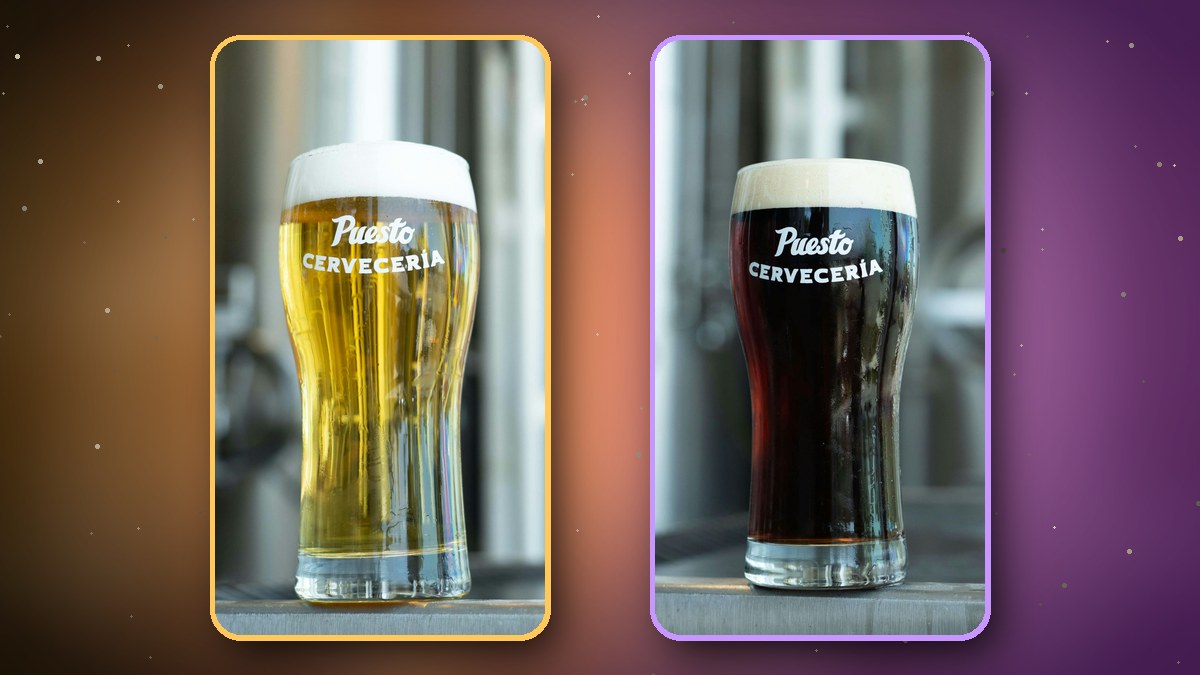
- Puesto Cervecería, Mission Valley: Puesto brews a core trio of Mexican lagers on-site in the former Gordon Biersch space. Clara (4.6% ABV, 19 IBU) is a bright golden lager with flaked corn. Amber (4.9% ABV) uses Vienna malt and corn as a nod to “the early days of brewing in Mexico.” Negra (5.3% ABV), a dark Mexican lager, is billed as a GABF gold medalist.
- Craft Coast Beer & Tacos, Oceanside and San Marcos: Co-owner Blake Masoner told SDVoyager that Agua Baja, a 4.5% Mexican lager, is the brewery’s most popular beer. Oscura, a 5% lager negra, is also in the core lineup.
- Michi Brew Co., San Marcos: Cenote Mexican Lager (4.5% ABV) is brewed with Motueka and Bru-1 hops and named for the freshwater wells of the Yucatan Peninsula.
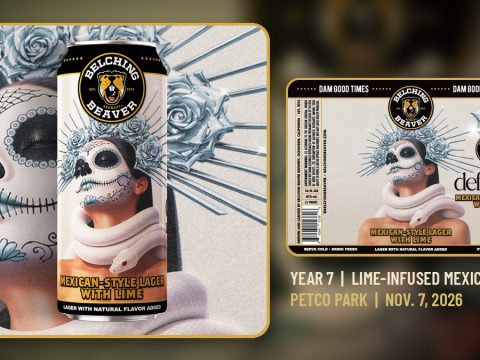
Lime fans also have a seasonal option. Belching Beaver and Deftones brought back their lime-infused Dia de los Deftones lager for year seven, ahead of the band’s Dia de los Deftones festival at Petco Park. Beyond San Diego, the archive holds other Mexican-style lager sightings, including Ska Brewing’s Mexican-Style Lager Dark and Lone Tree Brewing’s Lime Mexican Lager.
Pairing a Mexican-style lager with Dia de los Muertos
Dia de los Muertos is not Mexican Halloween. The Smithsonian explains that Nov. 1 is often a day to remember children who have died and Nov. 2 a day to honor adults, with families building ofrendas for their loved ones. It is a remembrance, so a Mexican-style lager belongs at the table, not at the center of it.
For the meal, Puesto’s own pairing notes are a helpful guide: Clara with tamarindo shrimp, carnitas or chicken al pastor, and the roastier Negra with quesabirria and desserts. A clean Mexican-style lager is built to cut through rich, slow-cooked dishes like these. If you want something seasonal that is not a lager, Culture Brewing’s FestCoast fest bier is pouring through Oct. 25.
Classification complete: pale or amber, corn or no corn, lime or no lime, the Mexican-style lager is a style with a messy family tree. San Diego keeps brewing it well. The Bureau recommends sampling all of the above, purely for science.
BEERALIEN.COM | Reporting on Earth’s finest craft beers from a galaxy far, far away.

 BeerAlien



 Terry Bunch