
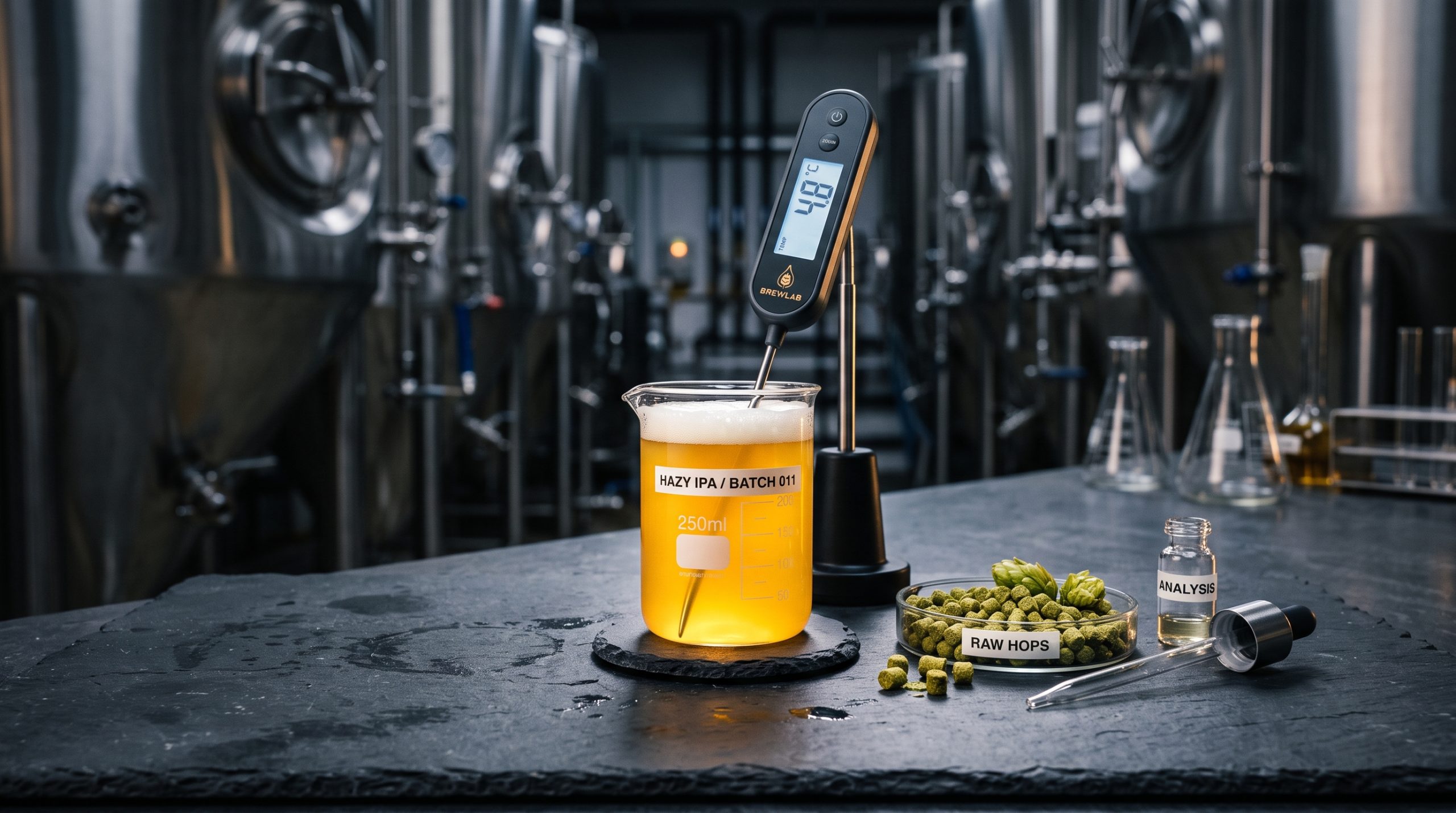
Welcome to the next investigation in our Hop Forensics series, where we examine the chemistry, brewing mechanics, and sensory science behind your favorite craft beers.
For decades, the term “IPA” was synonymous with tongue-scraping bitterness, intense pine resin, and a sharp bite that made non-craft drinkers recoil. Then came the New England Hazy IPA (NEIPA), flipping the script entirely. A fresh hazy pour hits the palate like a glass of tropical fruit juice—soft, velvety, and sweet, with almost zero lingering bite.
This leads craft beer drinkers to ask a fundamental question: Why is Hazy IPA not bitter, even though it uses massive amounts of hops?
The short answer comes down to temperature and timing. Traditional IPAs boil hops at high heat for 60 to 90 minutes to convert alpha acids into bitter compounds. Hazy IPAs add the vast majority of their hops during cold fermentation (“dry hopping”) or during low-temperature whirlpools. This extracts aromatic tropical hop oils while leaving the bitter alpha acids behind.
Table of Contents
Why Is Hazy IPA Not Bitter? The Chemistry of Low Bitterness.
Hop Forensics: Fast Facts
- Core Mechanism: Hops require boiling temperatures to turn alpha acids into bitterness. Hazy IPAs avoid high-heat hopping.
- Whirlpool & Dry Hopping: Hops are added at temperatures below 170°F (77°C) to extract juice flavors, not bitter resins.
- Water Chemistry: High calcium chloride-to-sulfate ratios round out the palate, making bitterness feel pillowy soft.
- Malt Cushion: Oats and wheat add high-protein fullness that coats the tongue and hides residual IBUs.
The Chemistry of Bitterness: Boiling vs. Dry Hopping
To understand why Hazy IPAs lack harsh bitterness, you must look at basic hop organic chemistry. Hop flowers contain sticky resin glands filled with alpha acids (such as humulone). In raw form, alpha acids are not soluble in liquid and do not taste intensely bitter on their own.
For hops to impart bitterness to beer, those alpha acids must undergo a heat-induced chemical reaction called isomerization. Boiling wort at 212°F (100°C) converts alpha acids into iso-alpha-acids, which dissolve into the liquid and create the classic bitter bite measured in International Bitterness Units (IBUs).
Traditional West Coast IPAs boil hops for an extended duration to deliberately create high IBU counts (often 60 to 100+ IBUs). Hazy IPA brewers deliberately alter this timeline:
-
Whirlpool Hopping (Below 170°F): Brewers let the unfermented beer cool before adding massive hop charges. Below 170°F (77°C), alpha acid isomerization drops to near zero, stopping bitterness formation while preserving fruity aroma oils like myrcene and linalool.
-
Double Dry Hopping (Cold Side): Massive hop charges are added directly into the cold fermenter (60°F–68°F). This step extracts pure tropical citrus flavors with zero added bitterness.
Water Chemistry and Grain Cushioning
Hazy IPA brewers do not rely on hop timing alone to suppress bitterness; they also manipulate water chemistry and grain selection to trick your palate.
1. The Chloride-to-Sulfate Water Ratio
Water profile dictates how bitterness is perceived on your tongue. Sulfates accentuate sharp, crisp hop bitterness (the secret behind West Coast IPAs). Chlorides enhance malt fullness and create a smooth, rounded mouthfeel. Hazy IPA recipes invert standard water profiles to favor high calcium chloride levels, softening any residual bitterness into a silky texture.
2. Oats, Wheat, and Protein Density
Hazy IPAs feature heavy additions of flaked oats and malted wheat (often 15% to 30% of the grain bill). These grains contribute massive amounts of proteins and beta-glucans. This thick, viscous liquid coats the taste buds, creating a physical barrier that further dampens perceived bitterness on the finish.
Hazy IPA vs. West Coast IPA: Bitterness Comparison
Summary: The Recipe for Juice-Like Pours
When you drink a Hazy IPA, you are tasting a deliberate chemical workaround. By avoiding high-heat boiling, loading the fermenter with cold hops, adjusting water salts, and adding heavy oats, brewers capture all the lush aromatics of the hop plant without extracting its harsh bitterness.