
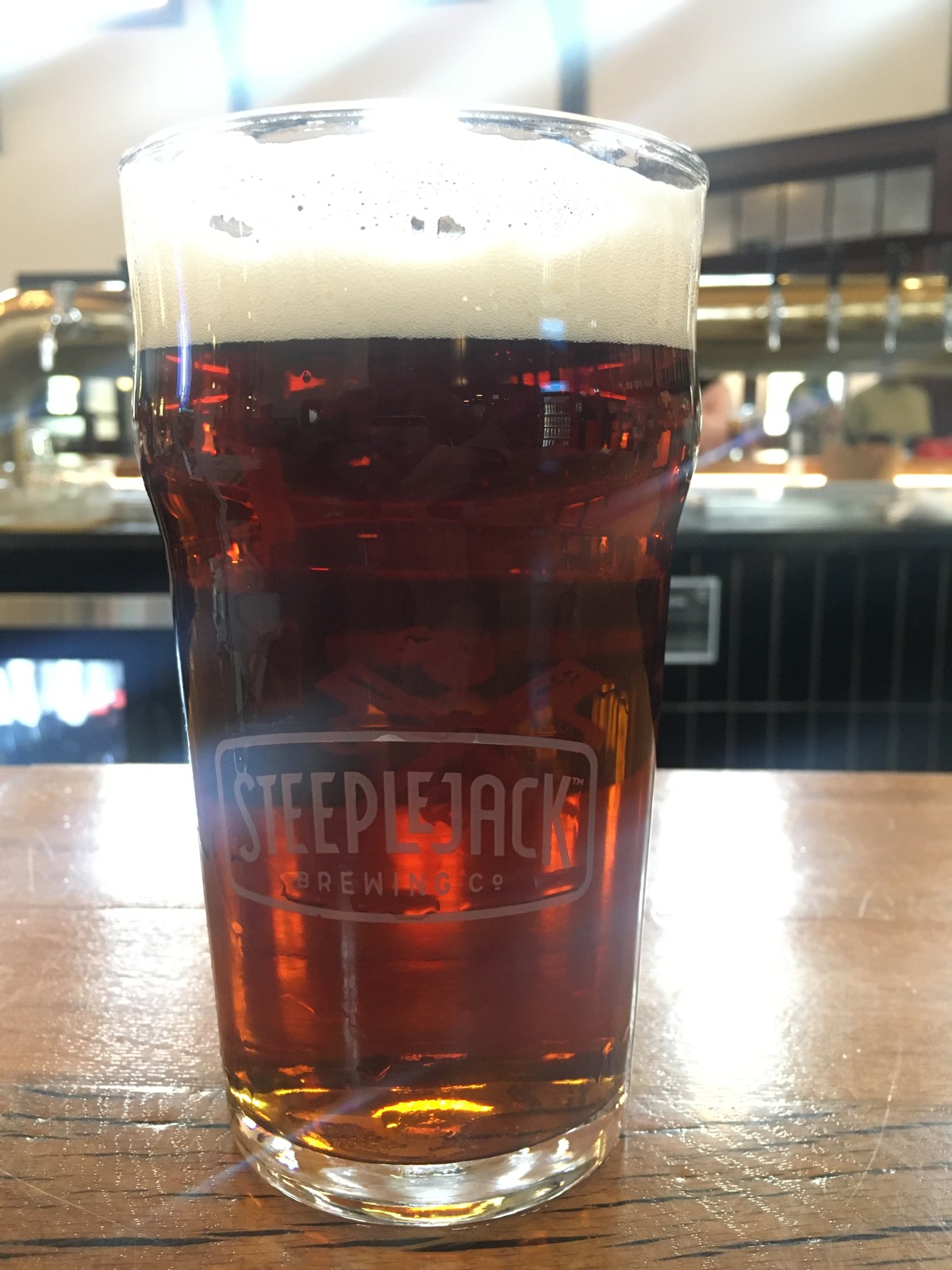
Kentucky Common beer is a historic Louisville ale: amber to brown, modest in strength, and made for fresh, everyday drinking. Its dark color does not make it a heavy stout, and its Kentucky roots do not make it a bourbon-inspired sour beer. The BJCP’s modern style guideline describes a malt-leaning, highly carbonated beer with a dry finish and no sourness.
The sour-mash story needs a more careful answer than a simple yes or no. Surviving brewery records do not support sour mashing as the defining production method. That is not the same as proving that no historical batch ever developed acidity—or that every early description agrees.
What Kentucky Common beer tastes like
Think light toast, grain, a little caramel and a possible corn-like sweetness, rather than dense roast or assertive tartness. The BJCP places the style at 4–5.5% ABV and 15–30 IBUs, with medium-light to medium body. Those are modern judging parameters, not a guarantee that every pre-Prohibition brewery made the same beer.
Its session-beer reputation fits its original job. The BJCP traces production around Louisville from after the Civil War until Prohibition and describes an inexpensive ale intended for immediate consumption. Freshness and a quick turnaround were central to that identity; long maturation was not.
How Louisville brewers made it
In their 2014 historical research handout, Leah Dienes and Dibbs Harting examine records from four larger Louisville breweries, including Butchertown material from 1904 and Oertel’s records from 1912. Their summary describes six-row pale malt and a substantial proportion of corn grits, with small black-malt additions and varying amounts of caramel malt. Some earlier recipes used caramel coloring when caramel malt was unavailable.
Corn was part of the main grain bill, not a whiskey connection pasted onto the style. The researchers describe a separate cereal mash of grits and some malt that went through short rests and a boil, then joined the main malt mash. After the combined mash, the wort was collected and boiled with hops. That documented sequence is more specific than the vague claim that brewers simply borrowed a distiller’s sour mash.
The handout reports fermentation at 66–68°F for three to four days, with an overall six-to-eight-day cycle from mashing to delivery. The BJCP describes beer going into barrels while still fermenting, with the sealed casks developing carbonation in saloon cellars. These accounts concern rapid production and cask conditioning, not a long souring or aging program.
Why the bourbon sour-mash explanation falls short
In whiskey production, The Oxford Companion to Spirits & Cocktails explains, sour mashing commonly involves returning backset—the liquid remaining after distillation—to a fresh mash. Its acidity helps manage pH and fermentation conditions. That is a production practice, not evidence that neighboring beer brewers used it, or that their beer was supposed to taste sour.
The Louisville records summarized by Dienes and Harting lay out the mash ingredients and timing without that sour-mash step. They do describe a brief, 15-minute acid rest in the cereal mash. An acid rest in a documented mash schedule is not, by itself, evidence of an extended bacterial souring process. The BJCP likewise rejects long acid rests and sour mashing as supported characteristics of the historical style.
The historical wrinkle: a 1906 account
There is a reason not to turn that conclusion into “Kentucky Common was never sour.” The 2014 handout reproduces a passage from the 1906 edition of Wahl and Henius’s brewing manual that calls for a “slight but characteristic bacteria taste and flavor.” It recommends yeast containing a moderate amount of rod-shaped bacteria to achieve that character. This is an early prescription for bacterial flavor, not merely a modern story.
Dienes and Harting propose contaminated cooperage as an explanation for the broader sour-beer lore. That interpretation does not erase the manual’s wording or establish how widely its advice was followed. The defensible distinction is narrower: recommending bacterial character during fermentation does not establish a sour-mash step. Historical beer character and the specific method used to produce it are separate questions.
Not California Common—and not automatically a sour ale
The shared word “Common” can mislead. California Common uses lager yeast at relatively warm temperatures and has a more pronounced hop-bitter profile in the BJCP definition. Kentucky Common uses ale yeast. The Kentucky guideline instead offers darker-colored Cream Ale as a useful comparison, while treating a direct historical connection as speculation.
For a modern interpretation, expect a drinkable, corn-and-malt-accented dark ale unless the brewer specifically describes a sour variation. The BJCP directs soured versions to its Mixed-Fermentation Sour Beer category rather than its historical Kentucky Common category. That is today’s judging distinction, not a verdict on every barrel poured in Louisville a century ago.