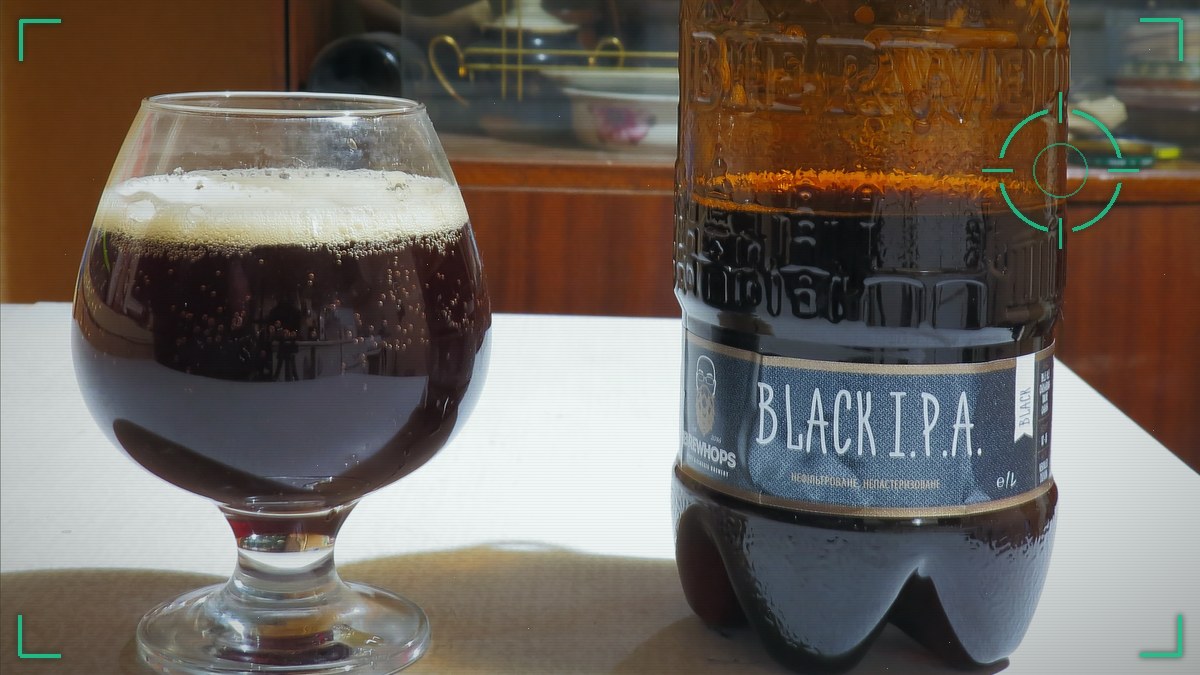
A black IPA looks like a stout and drinks like a hop bomb. It has the dryness, bitterness and resinous hop aroma of an American IPA, but it is built on dark malts that add color and a light roast without the burnt, ashy bite of a porter. The style has gone by several names: black IPA, India black ale, American-style black ale, and in the Pacific Northwest, Cascadian dark ale. It was one of craft beer’s first nationwide fads, then disappeared from most core lineups almost as fast. The place where it was born, The Vermont Pub & Brewery in Burlington, poured its last beers yesterday, Nov. 14, after 38 years. Here is where the style came from, why it faded, who still brews it, and what to play while you drink one.
Where black IPA came from
The style traces back to Greg Noonan, who opened The Vermont Pub & Brewery in 1988 after lobbying the state to legalize brewpubs. Accounts of the first batch differ on the date. The BJCP style guidelines say Noonan first produced it commercially as Blackwatch IPA “around 1990,” and Good Beer Hunting’s 2021 history of the style uses the same date. Smuttynose Brewing’s 2011 tribute to Noonan, and Craft Beer & Brewing, put the first batch on Dec. 4, 1994, brewed by Noonan and assistant brewer Glenn Walter.
Good Beer Hunting tells the story this way. Noonan had a hoppy Scotch ale recipe called Tartan IPA. Walter brewed a darker version called Black and Bitter, which was renamed Blackwatch IPA. It wasn’t brewed again until John Kimmich joined in 1995 and found the recipe in the archives. Kimmich colored it with Carafa Special III, a dehusked German roasted malt that gives a deep color with little burnt bitterness. That is still the standard trick for the style. Kimmich carried the idea to The Alchemist as El Jefe. That beer inspired Shaun Hill’s Darkside around 2005, and Darkside inspired Stone’s Mitch Steele, who turned to the same dehusked malt after his first test batches “all came out like hoppy Porters.” The result was Stone Sublimely Self-Righteous Black IPA. Noonan died in 2009. The brewpub he founded, Vermont’s longest-running brewery, closed Saturday, as we reported when the closure was announced.
Cascadian dark ale and the naming fight
The Pacific Northwest had its own path to the style. Good Beer Hunting points to Rogue’s Blackened Brutal Bitter, a late-1990s spinoff of Brutal Bitter, as a beer that Oregon writer Jeff Alworth links to what became known as Cascadian dark ale. Northwest brewers argued that a beer could not be “pale” and black at once. They also said the region’s hops, such as Cascade, Centennial, Chinook and Amarillo, gave the style its own character.
In January 2010, beer writer Abram Goldman-Armstrong organized a Cascadian dark ale symposium in Portland, BeerAdvocate reported. Brewers and writers tasted examples and drafted guidelines, which they sent to the BJCP and the Brewers Association. The Brewers Association added the style for the 2010 Great American Beer Festival, but under the name American-Style India Black Ale. It later shortened that to American-Style Black Ale. Smuttynose was blunter than most about the regional name. Its Noonan tribute called Cascadian dark ale “a West Coast attempt to appropriate the style” and said its own version was “a black IPA.”
Today the two main rulebooks still use different names:
- BJCP (2021 guidelines): 21B Specialty IPA: Black IPA. It allows 5.5% to 9% ABV, 50 to 90 IBU and 25 to 40 SRM, and it calls for debittered roast malts with flavor that is “not burnt or ashy.” Read the BJCP entry.
- Brewers Association / GABF 2026: American-Style Black Ale, listed as subcategory 23b under Specialty India Pale Ale. It allows 6.3% to 7.6% ABV, 40 to 70 IBU and 35-plus SRM, and says astringency and burnt roast “should be absent.” See the 2026 GABF categories.
Why the style faded
The BJCP history line is short. It says the style was “a popular fad in the early 2010s before fading into obscurity in the US.” Good Beer Hunting fills in the reasons. Black IPA was common in core lineups from about 2008 to 2014. It had an image problem from the start, because drinkers kept asking how an IPA could be black and whether roast clashes with fruity hops. Some versions were messy and astringent. Then, around 2015, the hazy New England IPA arrived and took bitterness out of the picture just as drinkers moved away from dry, bitter beer. Stone retired Sublimely Self-Righteous in 2015. Firestone Walker delisted its black rye IPA, Wookey Jack, in 2016. “It’s not often that you find a beer drinker whose daily pint is a Black IPA,” Firestone brewmaster Matt Brynildson told Good Beer Hunting. Kimmich put it another way: “I think it’s too aggressive of a style for a lot of the younger generations’ tastes.”
Who still brews it
The style never fully went away. These are examples we confirmed on brewery pages or current listings as of Nov. 15:
- Firestone Walker Wookey Jack (Paso Robles, California): The brewery’s page says “Wookey Jack is Back,” at 8.3% ABV and 70 IBU, as a limited release at Firestone locations in 16-oz. six-packs. It is hopped with Amarillo, Citra and Simcoe and uses dark malts including Midnight Wheat. We covered an earlier Wookey Jack return in 2021.
- Stone Sublimely Self-Righteous Black IPA (Escondido, California): Stone’s page lists it as a special release at 8.7% ABV and 90 IBU, with nationwide availability in 12-oz. six-packs and on draft, after its March 25, 2024, return. You can read our 2024 coverage. We could not confirm current shelf stock.
- Luppolo Bat to Black (Vancouver, British Columbia): This is on Luppolo’s current pouring list as a 6.5% black IPA. The brewery’s description, as quoted by a Vancouver beer newsletter, calls it an “old school Black IPA or Cascadian Dark Ale” hopped with classic C hops.
- Zilker Dracula Music (Austin, Texas): This 6.8% black IPA, brewed in collaboration with Radio Coffee and Beer, is hopped with Citra, Simcoe, El Dorado and Cascade.
- Four Saints Briscoe’s Black IPA (Asheboro, North Carolina): The brewery describes it as “dark and roasty up front, with a kick of citrus and pine.” It came back on tap Nov. 13, according to Jolly Pint.
In San Diego County, Green Cheek Beer Co. in Oceanside tapped Doom Sludge, a 7% West Coast black IPA, in late August, according to San Diego Beer News. Check the brewery’s tap list before you go, because we have not confirmed it is still pouring.
Auditory Frequencies: Cascadian black metal pairings
The Pacific Northwest gave this beer one of its names and also gave black metal one of its best-known regional sounds. Bands like Olympia’s Wolves in the Throne Room and Portland’s Agalloch tied their music to the region’s forests and weather. Here are our editorial pairings. None of them are official collaborations.
- Wolves in the Throne Room, Black Cascade (2009, Southern Lord), with Luppolo Bat to Black. The album title fits the beer almost too well. Pair it with a self-described Cascadian dark ale from Cascadia itself, piney with classic C hops over a dark malt base.
- Wolves in the Throne Room, Estuary (2026, Relapse), with Firestone Walker Wookey Jack. The band’s eighth album came out Oct. 23. Nathan Weaver says it is set “1,000 years in the future, after the death of civilization,” with nature reclaiming everything. The spicy rye and dank hops of Wookey Jack suit that overgrown, post-human mood, and both turned up again this fall.
- Agalloch, Ashes Against the Grain (2006), with Stone Sublimely Self-Righteous Black IPA. Agalloch’s heavier, electric turn and Stone’s 90-IBU black IPA are both forceful without being heavy-handed. Our full Ashes Against the Grain pairings go deeper into that record ahead of Agalloch’s 2027 Philly headline set.
Start with the lead single from Estuary, from Wolves in the Throne Room’s official channel:
For San Diego listeners, our sister site SDMETAL has reviewed the blackened-hardcore record The Path by Challenger Deep and written about why heavy metal and beer are a perfectly moshed combination. For another dark style that isn’t a stout, see our Czech dark lager explainer.
Black IPA FAQ
BEERALIEN.COM | Reporting on Earth’s finest craft beers from a galaxy far, far away.