
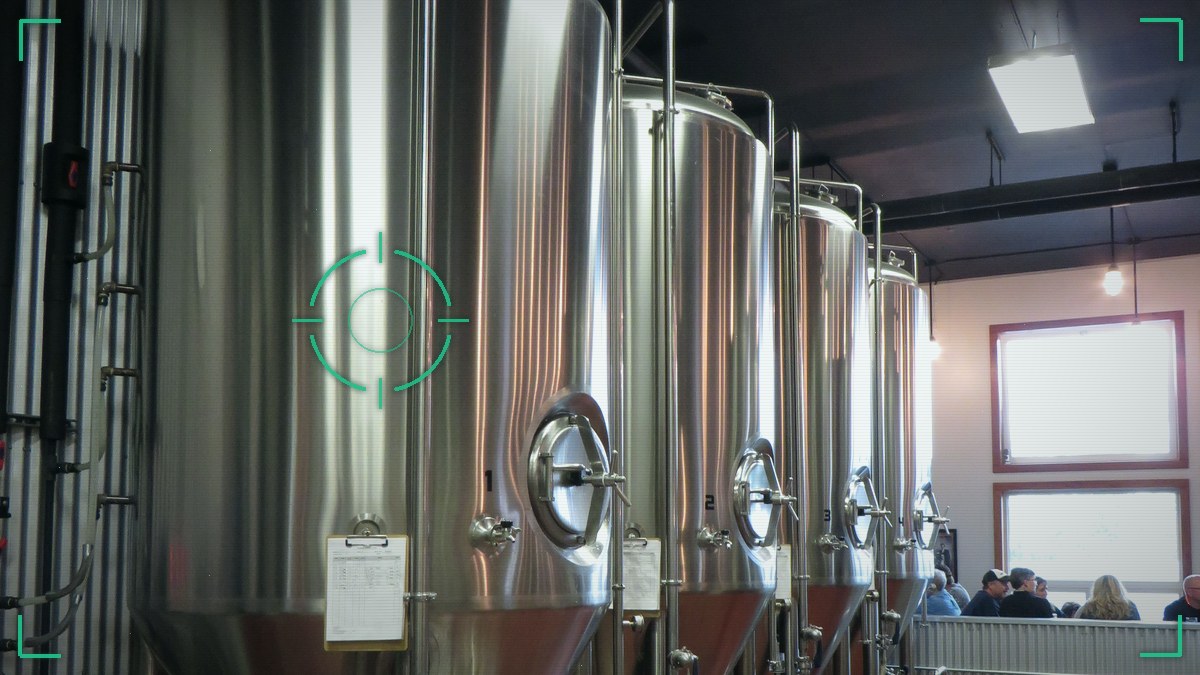
When a brewery talks about brewery size, it is almost always talking in barrels, not in the wooden casks stacked in a cellar. In U.S. beer math, one barrel is 31 U.S. gallons. The Brewers Association states that conversion on its national production page, and federal beer-tax rules use the same unit: 27 CFR 25.11 defines a barrel, as a unit of measure, as a quantity equal to 31 U.S. gallons. A standard half-barrel keg is 15.5 gallons, so two of those kegs equal one barrel. That is the ruler behind every production number in this explainer.
The trouble starts when two brewery size lists use the same ruler and then draw the lines in different places. Craft Beer & Brewing’s Best in Beer 2026 Readers’ Choice, for example, sorts favorite breweries into four volume bands of its own. The Brewers Association, which publishes the standard U.S. craft-beer census, uses a different set of labels, and some of those labels are about how the beer is sold, not only how much is brewed. That is why a brewery can look “small” on one brewery size list and not fit the Association’s “microbrewery” definition at all.
How the Brewers Association measures brewery size
Official brewery size labels in the United States come from the Brewers Association, and they are easy to mix up with the friendlier brackets that magazines use in polls.
The Association’s craft beer industry market segments page, checked on Nov. 17, 2026, defines six segments. A microbrewery produces less than 15,000 barrels a year and sells 75 percent or more of its beer off-site. A regional brewery produces between 15,000 and 6,000,000 barrels a year. A brewpub is a restaurant-brewery that sells 25 percent or more of its beer on-site and operates significant food services. A taproom brewery also sells 25 percent or more of its beer on-site, but it does not operate significant food services. The Association also defines a contract brewing company, which hires another brewery to produce its beer, and an alternating proprietor, a licensed tenant brewery that physically takes possession of a shared brewhouse while it is brewing.
Notice what is missing from a couple of those sentences. Brewpubs and taproom breweries are not given an annual barrel cap in the Association’s definitions. The split between them is food service, and the split between either of them and a microbrewery is where the beer is sold. A brewery making 4,000 barrels that pours most of it in its own room is not a microbrewery under those rules, even if everyday speech would call it one. Brewery size, in the Association’s census, is a mix of volume and business model.
Separately, an American craft brewer is defined as a small and independent brewer. The Association’s craft brewer definition, also checked on Nov. 17, sets “small” at annual production of 6 million barrels or less, or about 3 percent of U.S. annual sales, with production attributed according to the rules of alternating proprietorships. “Independent” means that less than 25 percent of the brewery is owned or controlled, or held as an equivalent economic interest, by a beverage-alcohol industry member that is not itself a craft brewer. A “brewer,” in that same definition, holds a Brewer’s Notice from the Tax and Trade Bureau, or controls the intellectual property for one or more beer brands, has those brands brewed for it in the United States, and has as its primary business purpose the resale of the brands it controls.
Craft Beer & Brewing does not use those brewery size cuts in its readers’ poll. Its 2026 favorite-brewery lists are grouped as Small (fewer than 5,000 barrels a year), Small Regional (5,000–25,000), Midsize Regional (25,000–100,000) and Large (100,000 or more). Those are volume-only tiers, and they are the magazine’s. The Large list this year includes names that would not meet the Association’s craft-brewer test, including Guinness. The poll is measuring reader favorites inside each band, not deciding who counts as a craft brewer. That is a useful distinction when San Diego names such as North Park, Pizza Port and Stone show up across four different C&B tiers, or when a Colorado brewery such as Westbound & Down says a new 30-barrel Longmont brewhouse will add 11,000 barrels a year. Eleven thousand barrels is a meaningful jump in brewery size. Whether that jump changes a brewery size label depends on which ruler you pick: under the magazine’s bands, that addition can still leave a brewery in the 5,000-to-25,000 small-regional group; under the Association’s rules, crossing 15,000 barrels is the line between a microbrewery and a regional brewery, and only if the rest of the definition fits.
If you are reading a ranking, a press release or a taproom sign and want to know what the number means, start with the 31-gallon barrel, then ask which definition of brewery size the writer is using. The Association’s terms are the ones that feed official industry counts. Polls are free to invent friendlier brackets, and Craft Beer & Brewing did. Both can be right, as long as they are not treated as the same scale. For local context, many of the San Diego County breweries in this year’s readers’ poll are also on our San Diego Brewery List.
BEERALIEN.COM | Reporting on Earth’s finest craft beers from a galaxy far, far away.